Scoring worksheet
The rubric with auto-totals, Plan/Track (KPIs, OKRs, efficacy), Reflect, and a worked example. Opens in Excel or Google Sheets.
Templates to fill in, references to share, and diagrams to reuse. Everything is CC BY 4.0: adapt it for your institution.
Tools teams fill in.
The rubric with auto-totals, Plan/Track (KPIs, OKRs, efficacy), Reflect, and a worked example. Opens in Excel or Google Sheets.
A template for KPIs, OKRs, efficacy measures, exit criteria, re-review triggers, and end-of-pilot reflection.
Who decides at each band, the escalation rule, named roles, and appeals. Edit the defaults to match your institution.
Print or save any initiative from the scorer as a one-page record with scores, band, metrics, decision, and sign-off lines. Export CSV for spreadsheets.
For review teams, workshops, and pre-reads.
Why it matters, the rubric, review bands, success metrics, the idea-to-action flow, and GRC integration.
All twelve examples, three per domain, one per page: scores, route, plan, and decision. Useful for calibrating teams.
One landscape page: review format, documentation, specialist input, decider, timing, and monitoring for each band.
For your own slides and policy documents. SVG scales cleanly; PNG is 2× resolution.
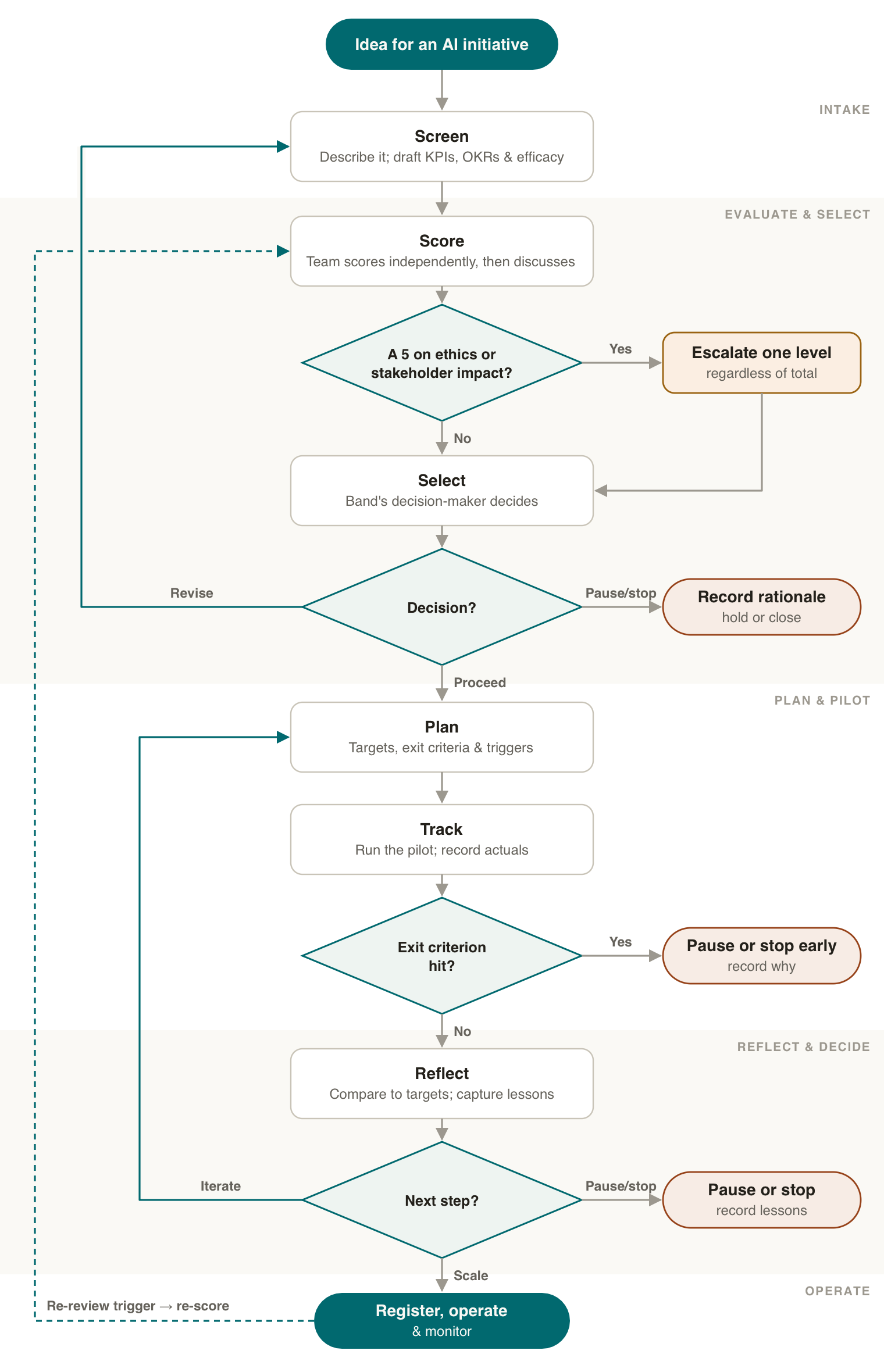
The six steps with decision points, escalation, and loops.
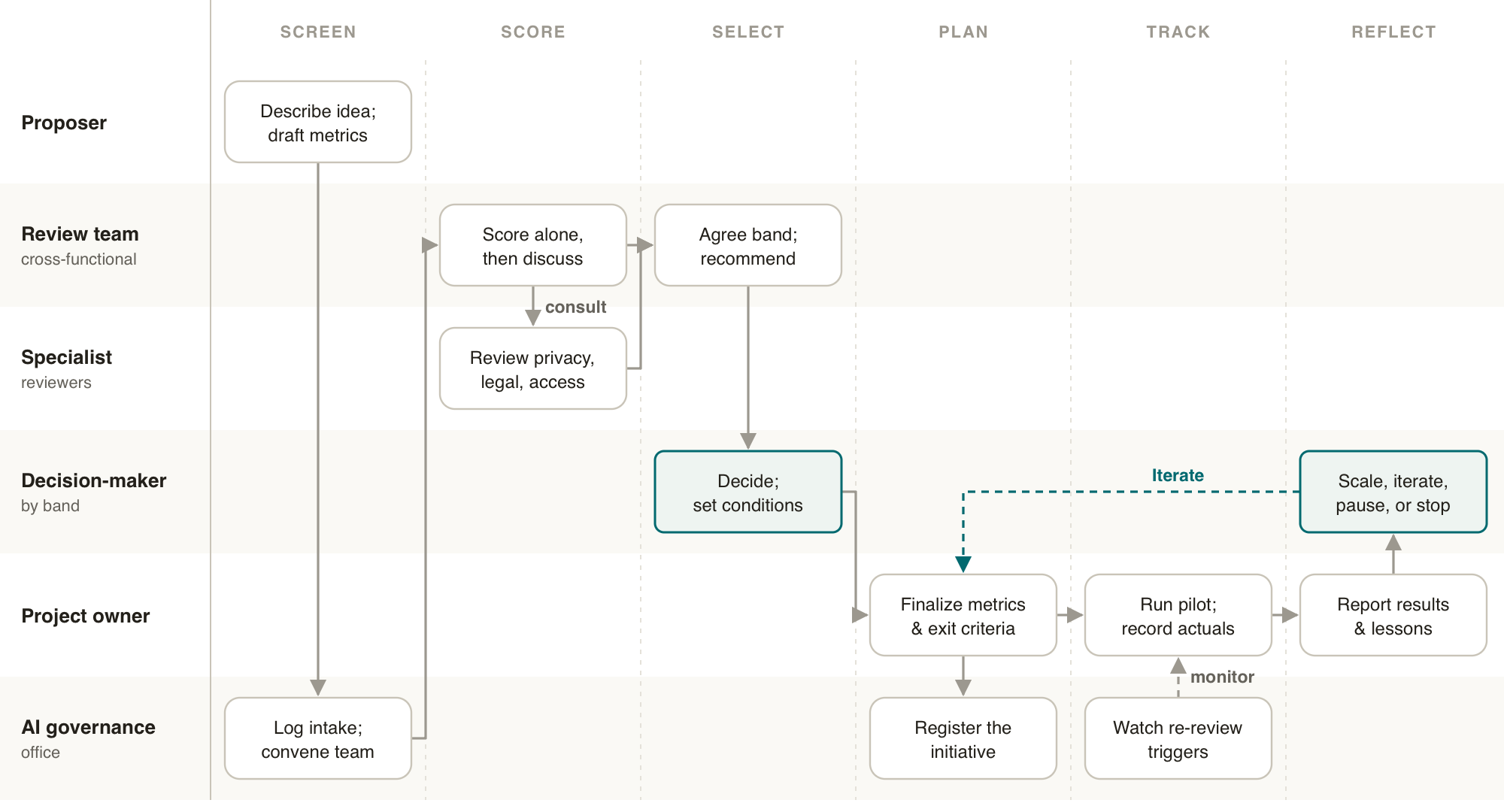
Who does what at each step, across six roles.
Start small. Test with one department or course before scaling, share plans with students and faculty early to build trust, and if a pilot falls short, use Reflect to adjust rather than abandon.
Representative content. The templates and references use example criteria, roles, timeframes, and scores. Edit them to match your institution's own process before use.